
A Problem as Old as the Data Stack Itself
Ask any data team lead about their biggest internal friction, and you’ll likely hear the same story.
Analysts want freedom. They want to query databases at will, pivot between languages mid-workflow, experiment with machine learning models, and move fast without filing a ticket every time they need a new library installed. That agility is how good analysis happens.
Security teams want control. Locked-down environments, no unauthorised outbound connections, full visibility into what’s running and where data is going. That discipline is how breaches and compliance failures get prevented.
Here’s the uncomfortable truth: both sides are completely right. And for years, the data tooling industry has forced teams to sacrifice one for the other.
That’s finally starting to change — and platforms like Grafieks are leading that shift.
Why Switching Between Tools Is Quietly Killing Productivity
Most data workflows today involve at least two or three disconnected environments:
- A SQL editor for querying.
- A Python IDE or Jupyter instance for transformation and modelling.
- A separate dashboard tool for visualisation.
- Maybe a spreadsheet somewhere in the middle.
Every context switch costs more than you think. You lose flow, you lose state, and you introduce friction that compounds across a team of ten, twenty, or fifty analysts.
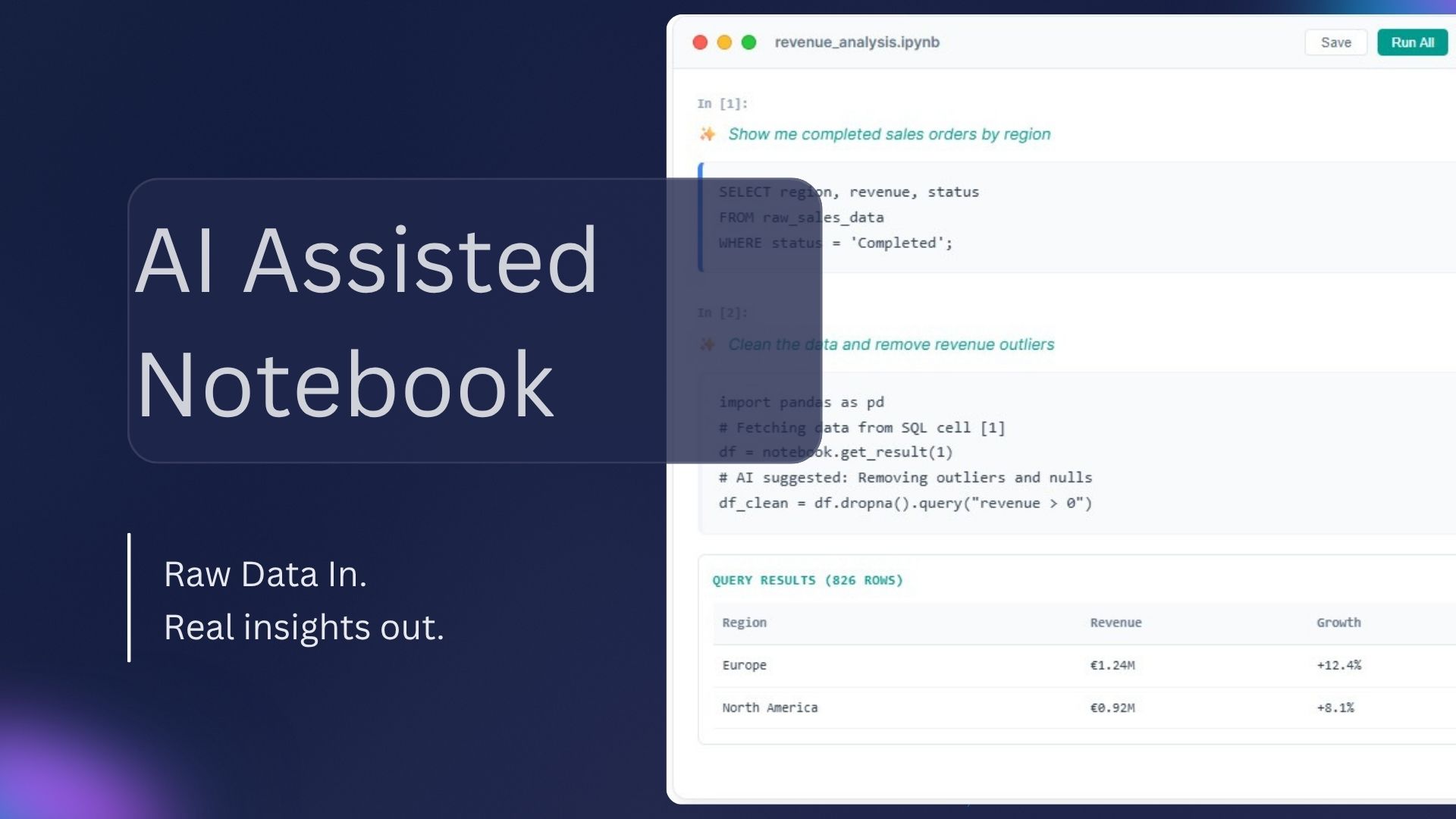
The modern answer is a unified notebook environment where SQL and Python live side by side. Write a query, pass the output directly into a Python dataframe, clean it, model it, and visualise it — all inside one coherent workspace.
Grafieks Notebooks delivers exactly this. No tab switching, no copy-pasting results between tools, no format mismatch. For analysts, this is a game-changer. For data teams at scale, it’s becoming a competitive necessity.
Pre-Loaded, Ready to Run — No More Environment Hell
If you’ve ever spent an afternoon debugging a dependency conflict instead of actually analysing data, you understand the hidden tax of self-managed environments. Version mismatches, missing packages, and broken installs are not edge cases — they’re a near-daily reality for data practitioners working across machines and teams.
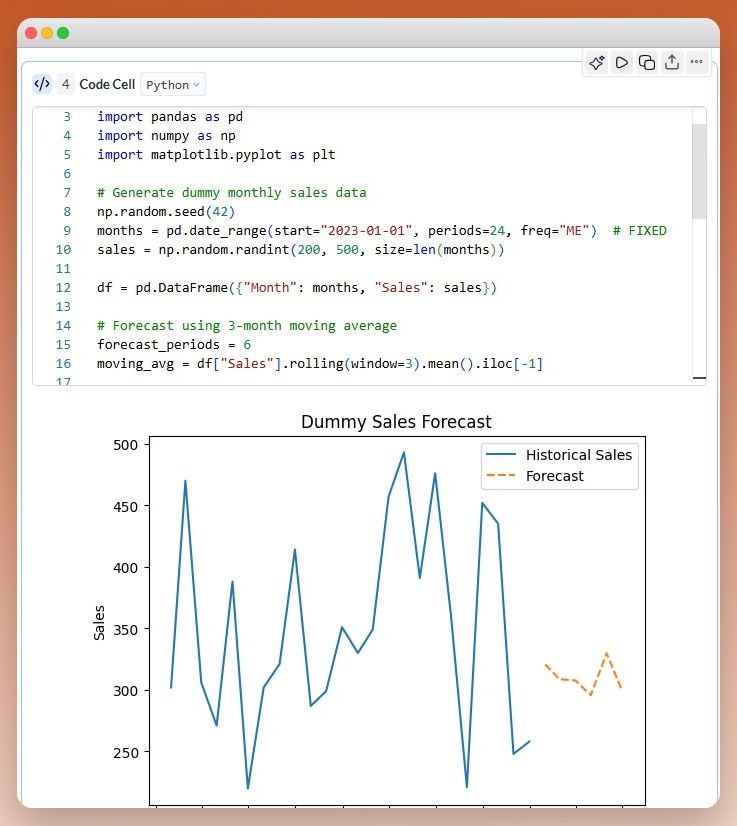
Grafieks eliminates this entirely. Its Notebooks environment comes pre-loaded with the libraries your team already relies on — ready for data cleaning, statistical analysis, and machine learning right out of the box. No setup, no conflicts, no wasted afternoons.
This isn’t a small quality-of-life improvement. It’s hours reclaimed every week, per analyst.
AI Assistance Done Right: Suggest, Don’t Execute
AI-assisted coding has arrived in almost every developer tool. But in data environments, the way AI assistance is implemented matters enormously.
Auto-executing AI-generated code in a data notebook is a serious risk. A miswritten transformation can silently corrupt a dataset. An unexpected query can hit a production database. The consequences of unchecked execution aren’t theoretical — they’re the kind of incidents that end up in post-mortems.
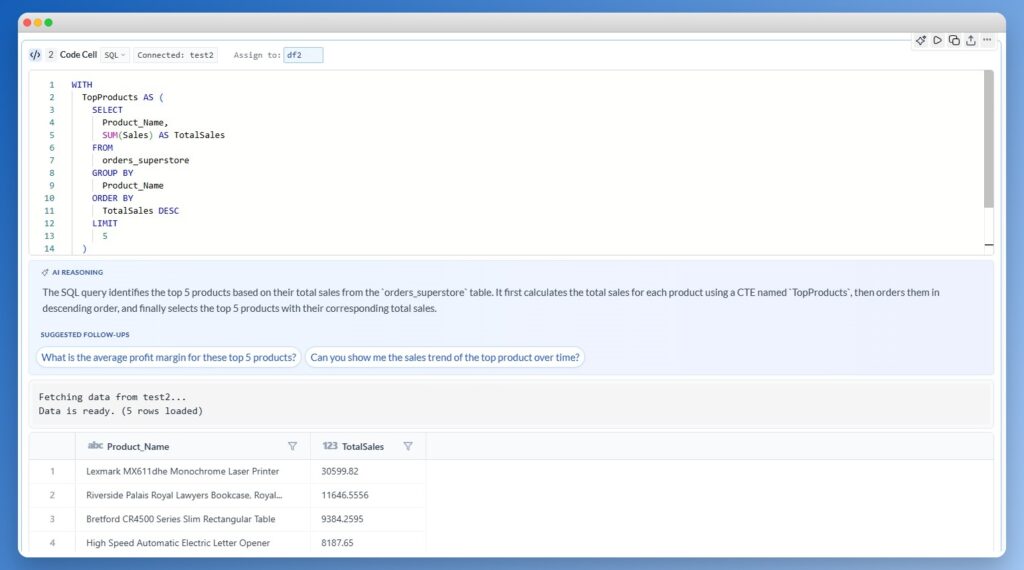
Grafieks takes a review-first approach. The AI suggests code. You read it, evaluate it, and then decide to run it. Nothing executes without your explicit approval. This keeps the speed benefits of AI assistance while preserving the human judgment that data work genuinely requires — building analyst understanding over time rather than creating a black-box dependency on generated code.
In high-stakes data environments, that distinction is everything.
Sandboxed Environments: The Feature Security Teams Actually Care About
Beyond AI controls, the architecture of the notebook environment itself determines whether security teams will ever sign off on it.
Grafieks Notebooks runs inside a fully sandboxed environment with zero external internet access. Code executes in isolation. Data cannot be exfiltrated through an unexpected API call. Third-party libraries cannot establish outbound connections. The blast radius of any mistake — human or AI-assisted — is contained by design.
For organisations operating under GDPR, SOC 2, HIPAA, or any number of compliance frameworks, this isn’t a nice-to-have. It’s the baseline requirement for putting analytical tooling anywhere near sensitive data. Analysts rarely think about this layer. Security teams think about almost nothing else. Grafieks bridges that gap quietly and effectively.
Flexibility and Governance Were Never Actually Opposites
The analyst-versus-security tension has persisted for so long that many teams have simply accepted it as an immovable feature of data work. It isn’t.
Grafieks Notebooks gives analysts a genuinely powerful workspace — multi-language support, pre-configured libraries, and intelligent AI assistance — while giving security teams the structural guarantees they need:
- Sandboxed execution.
- No external network access.
- and human-reviewed code before anything runs.
These goals were never truly in conflict. The tooling just hadn’t caught up yet.
Ready to See It for Yourself?
If your data team is still stitching together fragmented tools and navigating internal standoffs over access controls, it’s time for a better way.
Try Grafieks Notebooks today and give your analysts the freedom they need — inside an environment your security team will actually approve.
