

For decades, business intelligence (BI) has been synonymous with dashboards, static reports, and complex tools that only analysts could navigate. While dashboards remain powerful, they often create bottlenecks — business users must wait for reports, dig through layers of filters, or rely on data teams to answer simple questions.
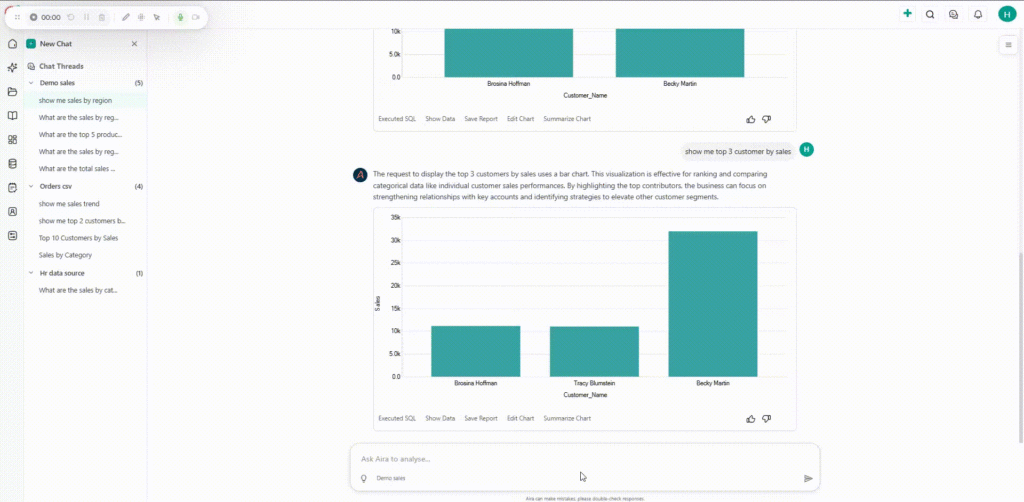
Enter Conversational BI: a new approach that lets users chat with their data. Instead of learning complicated BI software, users simply type or speak a question — “What were our Q2 sales in North America?” — and get instant answers, charts, or insights.
This shift from dashboards to dialogue isn’t just a trend. It represents the future of data analytics.
What Is Conversational BI?
Conversational BI (Business Intelligence) utilizes natural language interfaces, powered by AI and NLP (Natural Language Processing), to interact with data. Rather than navigating dashboards, users engage in a conversation with an AI assistant that understands queries and returns actionable insights.
Key features of Conversational BI include:
- Natural language queries instead of technical commands.
- AI-powered analytics that interpret business terms.
- Dynamic visualizations generated on demand.
- Personalized insights tailored to user roles and preferences.
Why Dashboards Are No Longer Enough
Traditional dashboards served their purpose, but they come with challenges:
- Static views that often lack flexibility.
- Data silos where information lives in different reports or tools.
- Dependence on data teams, slowing down decision-making.
- Steep learning curves for non-technical users.
In a world where speed and agility define success, businesses need real-time answers — not weekly reports.
Benefits of Conversational BI
- Faster Insights
Get immediate answers to questions without waiting for reports. - Accessibility for All
Non-technical users can access analytics using everyday language. - Smarter Decision-Making
Leaders make informed decisions with instant visibility into KPIs and trends. - Personalization
AI learns from past queries to deliver more relevant insights over time.
Conversational BI in Action
Imagine a sales manager preparing for a meeting. Instead of digging into dashboards, she simply asks:
- “Show me revenue growth for Q3 compared to last year.”
- “Which region has the highest churn rate?”
- “Give me a bar chart of top 10 customers by revenue.”
Within seconds, the AI generates the answers — freeing her to focus on strategy, not searching for data.
Conversational BI vs. Dashboards: A Comparison
| Feature | Traditional Dashboards | Conversational BI |
|---|---|---|
| Ease of Use | Requires training | Natural language, no training |
| Speed | Pre-built, static views | Real-time, dynamic answers |
| Accessibility | Mostly for analysts | For everyone in the organization |
| Scalability | Limited to dashboard design | Scales with user queries |
The Future of Data Analytics
As businesses continue to adopt AI-powered analytics, conversational BI will play a central role in making data accessible, actionable, and human-friendly. Dashboards won’t disappear — but they’ll be complemented (and in many cases replaced) by dialogue-driven insights.
The organizations that embrace this shift will empower every employee — not just analysts — to make data-driven decisions.
Final Thoughts
The move from dashboards to dialogue is more than a technology upgrade; it’s a cultural shift in how organizations interact with their data. Conversational BI represents the future of analytics: simple, fast, and accessible to all.
If you want your teams to move beyond static dashboards and into the world of real-time, AI-driven insights, it’s time to explore conversational BI platform like Grafieks.
