
Introduction: Why Speed Defines Modern Business Intelligence
In today’s world of real-time analytics, speed is everything. Business users expect dashboards to load instantly and insights to appear without delay. Behind this seamless performance lies an unsung hero — cache management.
At Grafieks, we believe that speed and intelligence go hand in hand. A well-designed cache architecture empowers organizations to transform raw data into actionable insights in milliseconds. Whether you’re analyzing financial trends, monitoring operations, or tracking customer behavior, effective caching is the foundation of high-performance analytics.
The Role of Caching in Business Intelligence
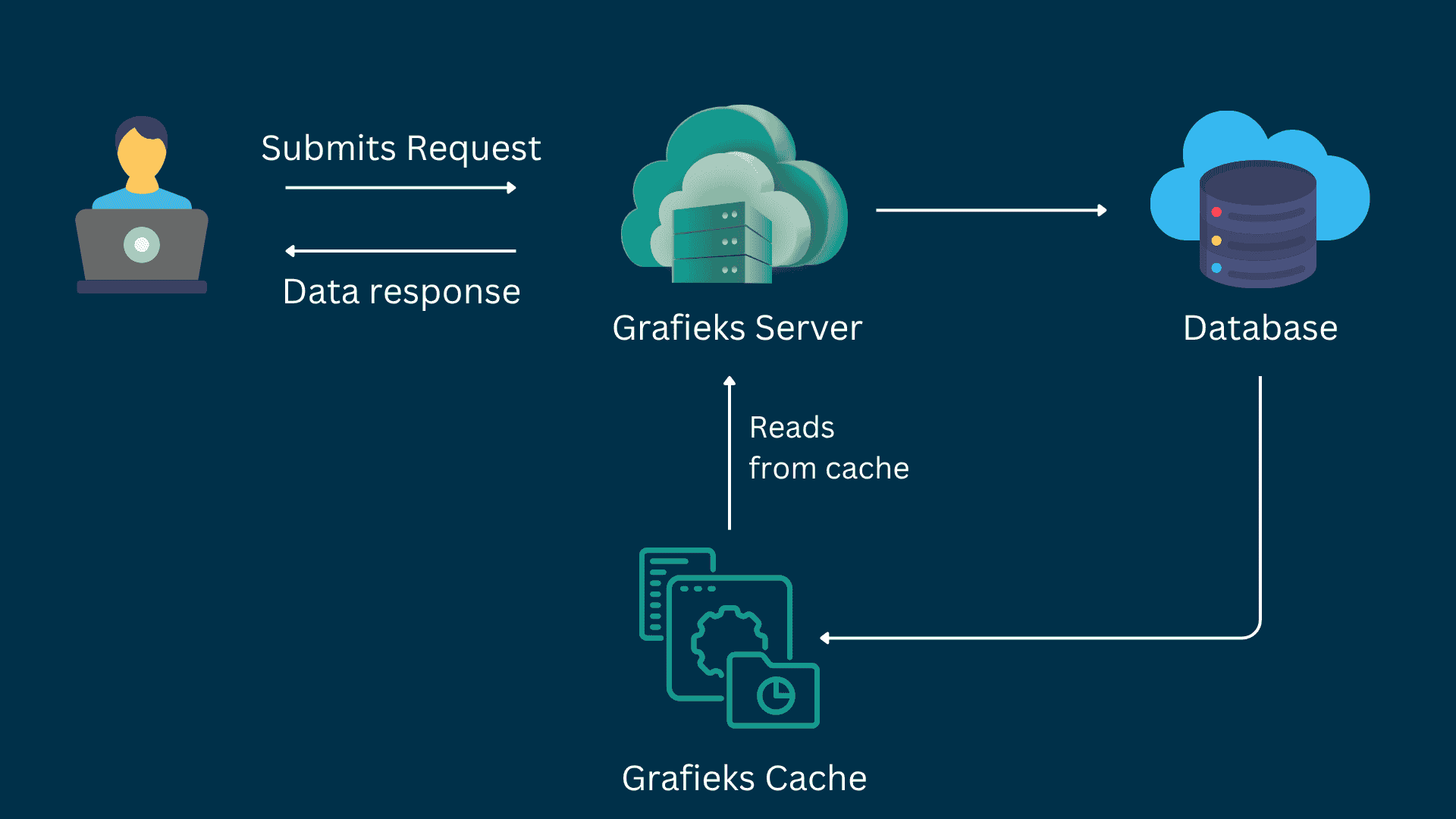
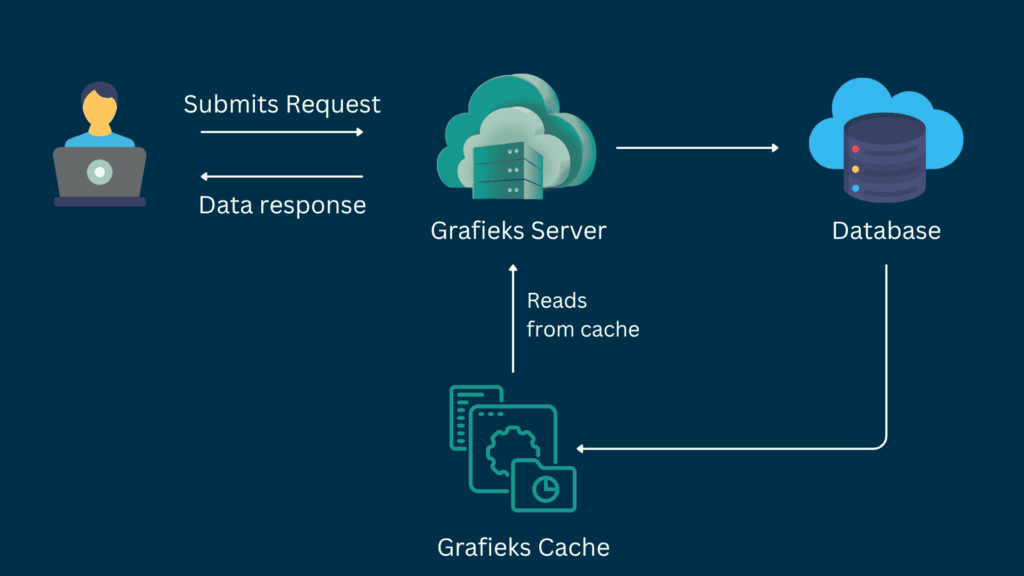
Every BI platform processes millions of data points daily. Without caching, every user interaction would trigger queries directly to source systems — data warehouses, APIs, or operational databases — slowing down performance and increasing infrastructure costs.
Caching solves this challenge by storing frequently accessed query results and precomputed summaries. Instead of recalculating data each time, the system serves results from cache memory, ensuring users get instant insights.
Key benefits include:
- ⚡ Instant query responses — dashboards load within milliseconds
- 💡 Reduced database load — freeing compute resources for critical operations
- 📈 Improved scalability — supporting hundreds of concurrent users seamlessly
Understanding Different Types of Cache in Analytics Systems
Caching in BI platforms operates across multiple layers — each designed to optimize a specific aspect of performance.
1. Query Cache
This stores the results of previously executed queries. When a user runs the same query again, the system retrieves the result instantly from cache instead of recomputing it. Ideal for recurring dashboards and team-wide reports.
2. Materialized Cache
Materialized caches hold pre-aggregated or summarized datasets — such as totals, trends, or KPIs. This is especially valuable for AI-driven analytics, where repeated computation of large datasets can be time-consuming.
3. Metadata Cache
Caching schema definitions, query plans, and user permissions speeds up query parsing and validation — reducing end-to-end latency across the BI workflow.
Challenges in Cache Management
While caching accelerates performance, it introduces complexity in data freshness, synchronization, and resource utilization. Key challenges include:
- Data freshness: Cached results can become outdated if source data changes frequently.
- Eviction policies: Deciding when to invalidate or refresh cached data affects both accuracy and speed.
- Concurrency: Managing simultaneous cache reads/writes in high-traffic environments requires precision.
- Storage optimization: Large caches demand efficient use of memory and disk space.
Successful BI platforms address these challenges through smart cache algorithms and dynamic refresh mechanisms.
Balancing Speed and Real-Time Accuracy
The key to world-class business intelligence performance lies in striking a balance between speed and data accuracy. Caching too aggressively risks serving outdated data; refreshing too often negates the performance benefits.
The solution? A hybrid refresh model:
- Time-based (TTL): Automatically invalidates cache after a defined interval.
- Event-driven: Refreshes cache when data changes at the source.
This ensures real-time dashboards stay both fast and accurate — a core expectation in modern self-service BI tools.
Continuous Optimization: Monitoring Cache Performance
Cache management is not a one-time task; it’s a continuous optimization cycle. Advanced BI systems monitor cache performance in real time and adjust configurations dynamically.
Essential metrics include:
- Cache hit ratio: The percentage of queries served from cache
- Average query time: Measuring end-user latency
- Data freshness intervals: Tracking update frequency
- Resource utilization: Ensuring optimal memory usage
Analyzing these metrics helps BI teams tune cache policies for sustained speed and reliability.
Smarter Cache, Smarter Decisions
Behind every lightning-fast dashboard is a powerful cache engine doing the heavy lifting. Effective cache management doesn’t just improve speed — it transforms how businesses experience data.
By combining adaptive caching, predictive intelligence, and real-time optimization, organizations can achieve truly AI-powered analytics that scale effortlessly.
In a world where decisions are only as fast as the data behind them, smarter cache management isn’t optional — it’s a competitive advantage.
Explore how Grafieks delivers lightning-fast BI experiences.
